UN warns of rising attacks on shipping in Hormuz and Red Sea
The International Maritime Organization recorded 134 confirmed incidents in the region as of Nov. 11, and 25 seafarers have been killed.
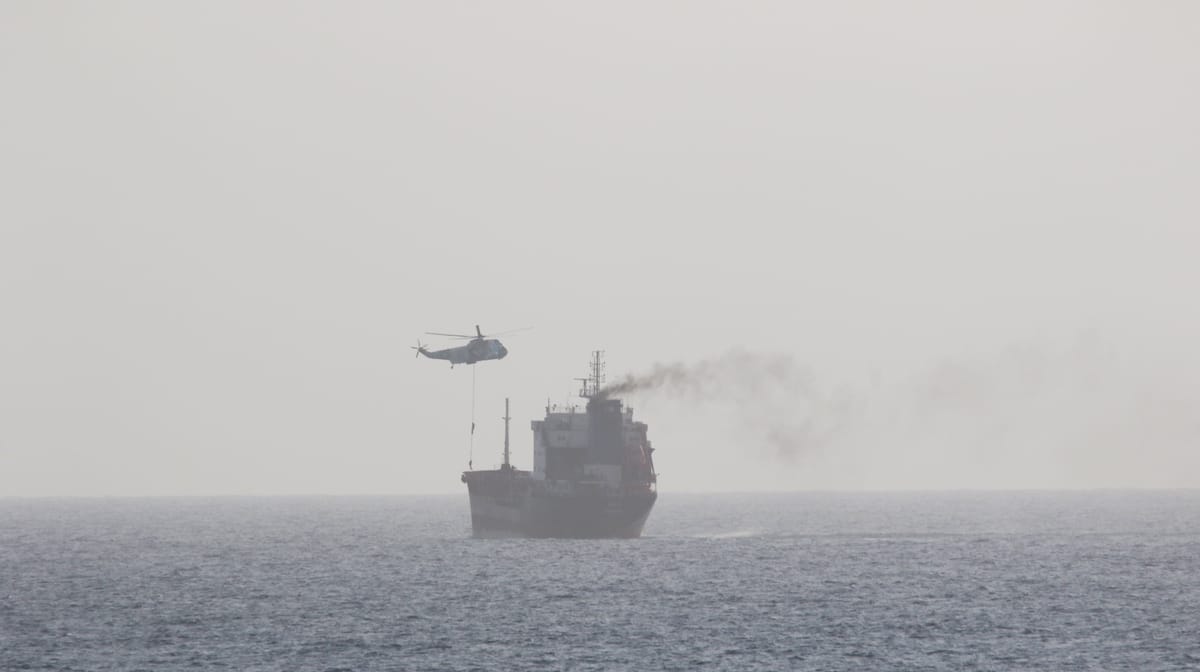
A UN official warned the Security Council on Friday that attacks on commercial ships around the Strait of Hormuz and Bab al-Mandab threaten peace, regional stability and the global economy, Turkey's state-run news agency Anadolu Agency reported.
Khaled Khiari, assistant secretary-general for the Middle East, Asia and the Pacific, told the Council by video link that incidents at sea had kept climbing, with vessels hit in several ways and many crews stranded in the Gulf for months.
Briefing the Council at Bahrain's request, Khiari said limits on navigation were adding to uncertainty, even though much of the region's energy exports had resumed through alternative routes.
He cautioned that the recovery in energy exports did not mean conditions had returned to normal, since sea shipments remained below levels seen before the conflict.
The International Maritime Organization said October saw the highest monthly number of attacks on commercial shipping since February.
The agency had logged 134 confirmed incidents in the Strait of Hormuz and the wider Middle East maritime area as of Nov. 11, Khiari said.
Twenty-five seafarers have been killed, and many more were injured or are still missing, he said.
Khiari said the current shipping arrangements were expensive, unpredictable and unsafe, and that they were raising energy, transport and insurance costs, feeding inflation and putting food security at risk, especially because fertilizer shipments were severely limited.
He called for full restoration of safe navigation under international law, and said the secretary-general's position was that chokepoints must never be used to coerce countries.
On US-Iran tensions, Khiari said the UN was encouraged that there had been no major military clashes since early September, but he voiced concern about rhetoric hinting at renewed confrontation.
He welcomed renewed diplomacy in Doha and elsewhere in the region, despite a stalemate in talks on the nuclear issue and sanctions.
Khiari urged both sides to negotiate in good faith and said he hoped mediators could help Iran and the United States reach a lasting peaceful settlement.
Separately, Jasem Mohamed Albudaiwi, secretary general of the Gulf Cooperation Council, told the Council that the GCC rejects any infringement on its security, sovereignty and territorial integrity.
Albudaiwi said attacks on member countries violate international law and require action by the Council.
The GCC asked the Council to take steps to end Iranian and Houthi attacks and to protect shipping, crews and energy facilities, he said.
Albudaiwi added that member states would continue supporting mediation, peace, development and humanitarian efforts.