China and Switzerland Update Free Trade Agreement to Reduce Tariffs
China and Switzerland have updated their free trade agreement to cut tariffs and improve market access for goods, services, and investment.
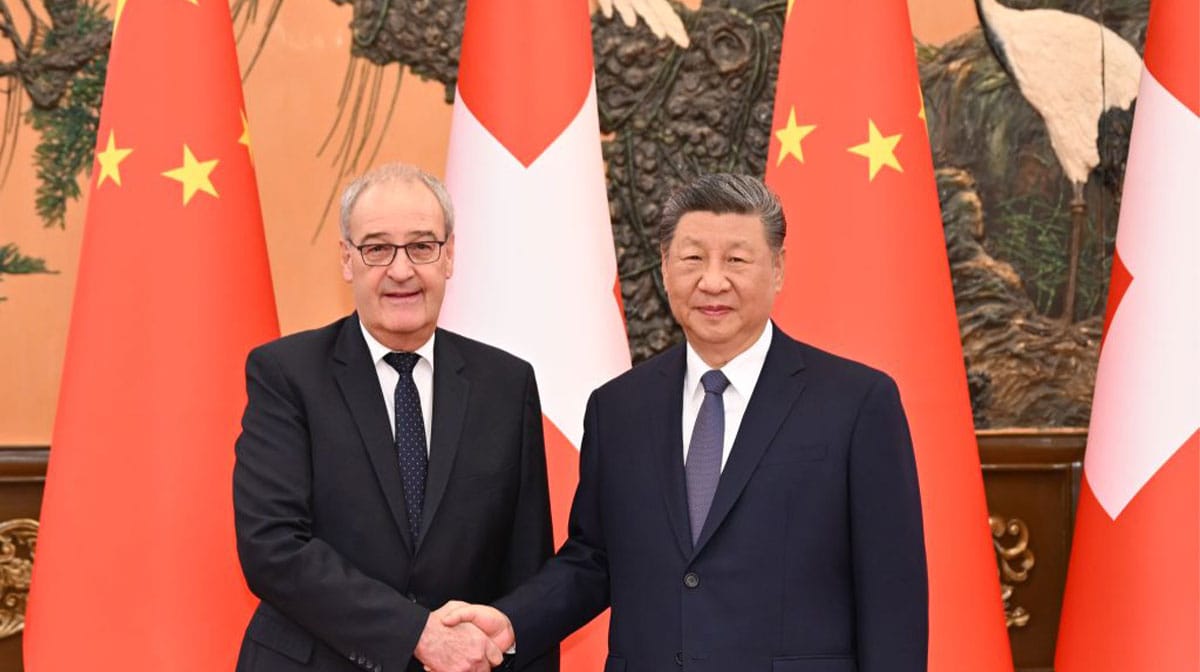
China and Switzerland have reached an updated free trade agreement that will increase duty-free access for Swiss goods in the Chinese market to 99.8 percent, compared with the existing coverage of 53.6 percent, Qatar News Agency (QNA) reported on Thursday.
Signed in Beijing, the revised agreement provides for the immediate removal of tariffs on 77.5 percent of Swiss goods exports to China. Duties on a further 22.3 percent of exports will be eliminated gradually over a period of five to 10 years.
The agreement also improves market access for Chinese agricultural products in Switzerland, covering 97.3 percent of China's agricultural exports to the European country. Of these exports, 80.1 percent will qualify for complete tariff exemptions.
Beyond trade in goods, the updated pact is designed to improve access for Swiss businesses to China's services sector, opening additional avenues for commercial activity and investment between the two countries.
Chinese President Xi Jinping described free trade cooperation as an important foundation of relations between Beijing and Bern. He called for closer economic engagement with Switzerland and other European countries, underscoring the importance of strengthening bilateral ties through trade and economic cooperation.
Swiss President Guy Parmelin said the revised agreement would better address the needs of businesses, reinforce confidence between the two countries and provide new opportunities for economic collaboration.
The latest agreement builds on a free trade pact originally signed by China and Switzerland in July 2013, which entered into force on July 1, 2014.
The existing framework has supported commercial ties between the two economies, while the revised terms seek to widen market access and further reduce trade barriers.
Official Swiss data show that bilateral trade between the two countries, excluding gold and other precious goods, totalled approximately 33.5 billion Swiss francs ($40.3 billion) in 2025, highlighting the scale of their economic relationship.
The expanded tariff concessions are expected to strengthen opportunities for exporters on both sides by reducing the cost of accessing each other's markets.
For Swiss companies, broader duty-free coverage could improve the competitiveness of their products in China, while Chinese agricultural exporters stand to benefit from expanded tariff exemptions in Switzerland.
The agreement also reflects broader efforts by China to deepen its international trade relationships through free trade arrangements with partner economies.
Beijing has pursued such agreements as part of its strategy to support economic activity, expand export opportunities and strengthen links with global markets.
Switzerland, meanwhile, has long supported trade liberalisation and developed a network of free trade agreements with countries and regional partners, including the European Union. The revised arrangement with China marks a further step in the development of economic ties between the two countries.