
Pakistan Opposes Additional Permanent Seats on UN Security Council
Pakistan reiterates opposition to additional permanent seats on UN Security Council, citing concerns over inequality and paralysis.
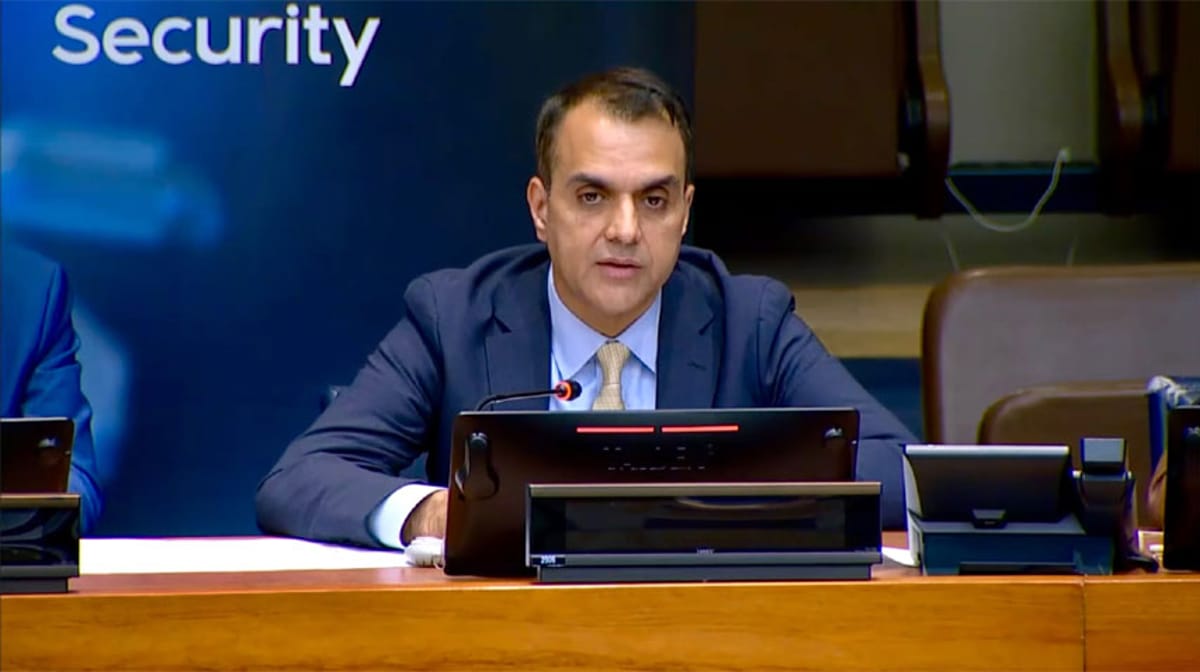
Pakistan has reiterated its opposition to creating additional individual permanent seats on the United Nations Security Council (UNSC), the state broadcaster Radio Pakistan reported.
The country's Acting Permanent Representative to the UN, Usman Jadoon, made these remarks at a UN General Assembly plenary meeting on Security Council reforms.
He emphasized that reforms should address existing imbalances rather than entrench historical privileges or create new centres of exclusive power.
Jadoon stated that permanent membership and the veto power had contributed to the Security Council's paralysis and inability to respond effectively to threats to international peace and security. He argued that expanding the permanent category, with or without veto powers, would perpetuate inequality rather than democratize the Council.
Instead, Jadoon advocated for expanding the elected, non-permanent category as a more democratic and inclusive path forward.
The UN Security Council currently consists of 15 members, with five permanent members - China, France, Russia, the United Kingdom, and the United States - and 10 non-permanent members elected for two-year terms.
The debate over Security Council reforms has been ongoing for years, with many countries calling for changes to make the Council more representative and effective.
The issue of UN Security Council reform is complex and contentious, with various countries pushing for different models. Some countries seek to expand the number of permanent seats, while others advocate for a more representative and democratic Council.
Pakistan's position reflects its concerns about the potential consequences of creating new permanent seats and its commitment to a more inclusive and equitable international order.