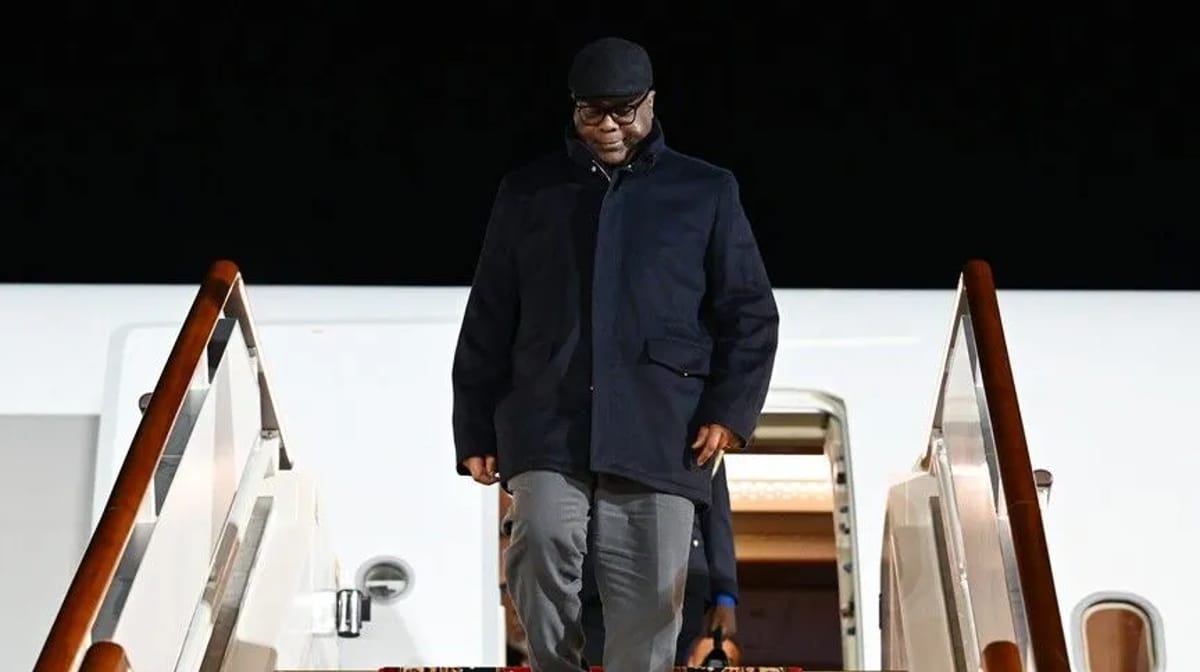
Belgium's king rejects De Wever's resignation amid budget deadlock
Belgium's coalition must still close a fiscal gap of about 10 billion euros, with its five parties divided over spending cuts and tax increases.

Belgium's King Philippe refused on Friday to accept Prime Minister Bart De Wever's resignation and asked him to restart budget talks, China's state news agency Xinhua reported.
The Royal Palace said in a statement that De Wever must report back on Nov. 16, and the five governing parties pledged to make concessions to agree a sound budget path for the next three years.
The move came four days after De Wever offered to resign when budget negotiations collapsed.
Analysts said the decision gives the coalition more time to seek a compromise, but reaching an agreement remains difficult.
The central dispute is how to achieve a fiscal adjustment of about 10 billion euros ($11.2 billion) by 2029 and how to share the burden.
De Wever's New Flemish Alliance (N-VA) and the Reformist Movement (MR) favor spending cuts and structural reforms, while Vooruit, CD&V and Les Engages want wealthier groups to contribute more.
Disagreements over proposed reductions in health care and social spending have also complicated the talks.
Peter Vanden Houte, chief economist at ING Belgium, told Xinhua in a written interview that the tax burden is already high and that spending cuts alone are unlikely to close the gap.
Citing a report on Belgium released Tuesday by the Organization for Economic Cooperation and Development (OECD), Vanden Houte said deficit reduction should rely on roughly one-third new revenue and two-thirds spending restraint.
The OECD report said Belgium's public debt exceeded 100 percent of gross domestic product (GDP) in 2025, while its budget deficit was above 5 percent of GDP, both above EU reference values.
Vanden Houte said that even if the planned 10 billion euros in savings over three years is delivered, the deficit would remain close to 4 percent of GDP.
Belgium's linguistic divide has also made coalition-building difficult, as the country took 541 days to form a federal government after the 2010 elections.
The current coalition took nearly eight months to form after the 2024 elections.
Trade unions have opposed the government's reforms, and repeated strikes have been held against changes to pensions and unemployment benefits.
Selena Carbonero Fernandez, general secretary of the socialist trade union FGTB, told Xinhua in a written interview that the government bypasses unions and pushes through policies that should be subject to social dialogue.
Speaking in the Chamber of Representatives on Thursday, De Wever acknowledged that Belgium would begin 2027 under a provisional budget, as it did this year, despite having earlier ruled this out.
Under that mechanism, the government can keep operating without an approved budget, with monthly spending generally limited to one-twelfth of the previous year's appropriations.
Faniel, director of the Centre for Socio-Political Research and Information (CRISP), said the parties' increasingly rigid positions make a way out of the crisis hard to find.
"Success remains possible, but so does failure," he said.
Belgium's three main trade unions have called a national demonstration in Brussels on Nov. 23.