
Iran Says Pakistan Border Reopened After Temporary Technical Issues
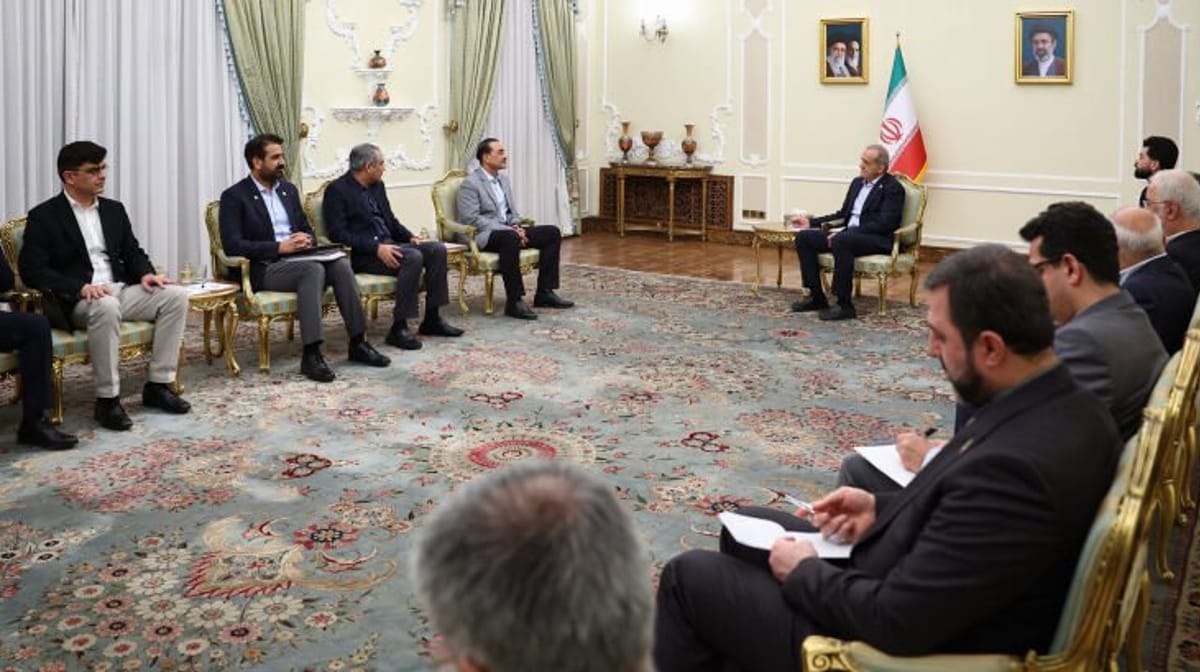
Iranian President Masoud Pezeshkian and Parliament Speaker Mohammad Bagher Ghalibaf have thanked Pakistan for its diplomatic efforts to reduce regional tensions, as Field Marshal Asim Munir said a temporary issue affecting border crossings between the two countries had been resolved.
According to Iran’s state news agency IRNA, Munir, Pakistan’s Chief of Defence Forces and Chief of Army Staff, met Ghalibaf and Pezeshkian separately in Tehran on Tuesday during his visit to Iran.
During his meeting with Ghalibaf, Munir said the border-related issues were temporary and technical and that the border between Iran and Pakistan had reopened on Tuesday.
View this post on X
He also conveyed greetings from Pakistan’s National Assembly Speaker Ayaz Sadiq and Prime Minister Shehbaz Sharif, reaffirming Islamabad’s commitment to continued cooperation with Tehran.
Ghalibaf thanked Pakistan’s government and people for standing alongside Iran during the war and diplomatic negotiations, describing the relationship between the two countries as brotherly.
Discussing negotiations between Iran and the United States in Islamabad, Ghalibaf said he had told the US vice president that Washington’s long history of actions against Iran, both before and after the 1979 Islamic Revolution, had created deep mistrust.
He added that the Trump administration’s alleged violation of the Islamabad understanding and its repeated threats had further undermined confidence in Washington.
Ghalibaf said Iran had no new demands and that the United States could regain Tehran’s trust only by implementing Iran’s seven conditions presented in New York.
“We are not seeking war, but we are fully prepared to defend our homeland and national dignity,” he said, adding that military threats and movements would not influence Iran’s strategic decisions.
He said the United States had entered a quagmire through its miscalculations and war against Iran and must take the necessary steps to find a way out.
In his separate meeting with Munir, Pezeshkian thanked Pakistan for its efforts to reduce tensions and resolve disputes through diplomatic channels.
According to IRNA, the Iranian president said regional problems, including escalating tensions, conflict and disruptions in the Strait of Hormuz, stemmed from what he described as the United States’ warlike approach.
Pezeshkian accused Washington of attacking Iran during negotiations and said the country had demonstrated its good faith in nuclear talks and inspections within the framework of international law.
He said the United States must lift its threats and sanctions before meaningful dialogue could take place.
“It is not possible to increase sanctions and pressure day by day, close routes and avenues to our country, and then claim to seek dialogue and negotiations,” Pezeshkian said.
The Iranian president added that war was in the interests of neither Iran nor the wider region and the world, including the United States, and called on Washington to explain why it had initiated the conflict.
Pezeshkian said Tehran remained ready for talks but insisted that the United States must first remove its threats and sanctions. He also warned that military action would not achieve Washington’s objectives and would instead cause destruction and losses across the region.
He said the Iranian people did not trust the United States and feared that Washington could launch another attack if negotiations resumed.
Munir, meanwhile, briefed the Iranian president on Pakistan’s diplomatic efforts to ease tensions and expressed concern over the possibility of renewed conflict.
He reiterated Pakistan’s readiness to help resolve outstanding issues through diplomacy, stressing that negotiations did not amount to weakness or surrender.
Munir also expressed regret over the failure to implement the Islamabad understanding, saying dialogue offered an alternative to war, conflict and insecurity.
He briefed Iranian officials on security measures taken in areas affected by disruptions to transport routes and said the issue had been raised immediately with officials at the foreign ministry before the temporary problem was resolved on Tuesday morning.