Pakistan seeks Brazil's expertise in modern agriculture
Pakistan and Brazil discuss cooperation in agriculture, livestock management
Pakistan aims to tap into Brazil's expertise in modern agriculture, livestock management, and meat production, the state broadcaster Radio Pakistan reported.
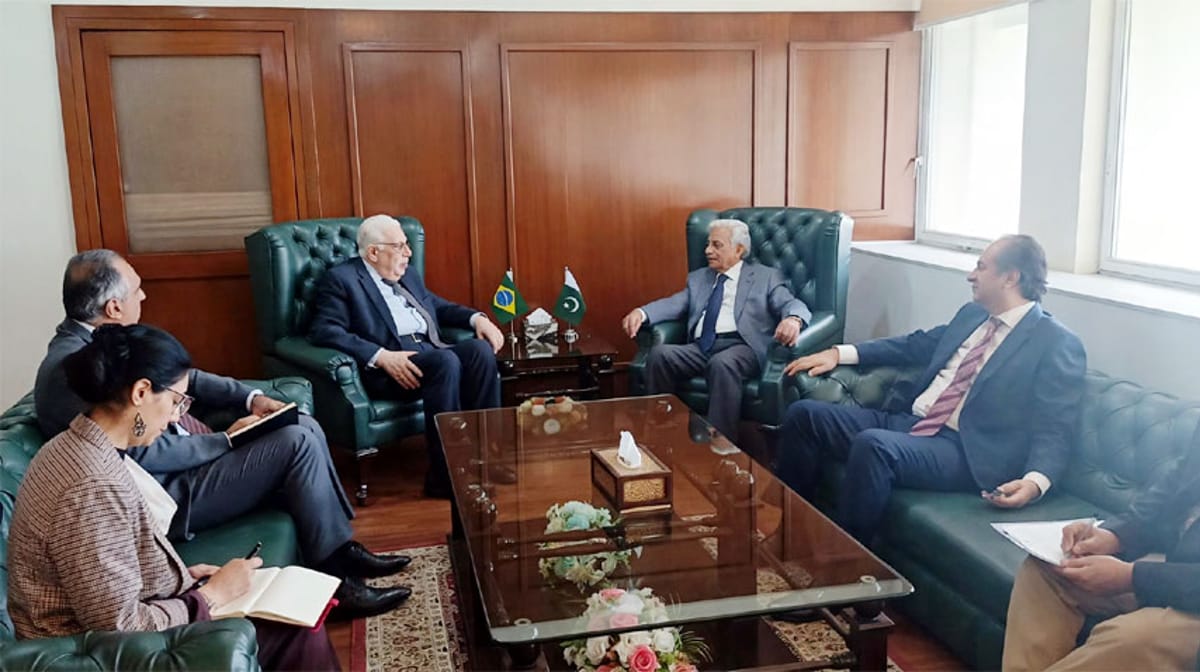
The country's Minister for National Food Security and Research, Rana Tanveer Hussain, met Brazilian Ambassador Olyntho Vieira in Islamabad on Wednesday.
Hussain emphasized that collaboration with Brazil would boost Pakistan's agricultural productivity, enhance food security, and increase the global competitiveness of its agricultural products.
Pakistani experts will visit Brazil to study its advanced farming practices, research institutions, and livestock development models, Hussain said.
The Brazilian Ambassador highlighted the role of Embrapa, Brazil's renowned agricultural research institution, in transforming the country's agricultural sector through scientific research and innovation.
Both sides agreed to promote institutional collaboration between the Pakistan Agricultural Research Council and Embrapa in areas such as agricultural research, technology transfer, and human resource development.
The meeting also explored potential areas for technical cooperation, including sugarcane production, ethanol manufacturing, and biofuel blending.
The two sides discussed ways to diversify agricultural exports and imports, with a focus on market access for Pakistani Basmati rice in Brazil.
The Ambassador also acknowledged the popularity of Pakistani pink salt in the Brazilian market and stressed the need to address concerns regarding counterfeit products.
Pakistan has been seeking to modernize its agricultural sector and improve its productivity, with a focus on increasing exports and enhancing food security.
Brazil is a global leader in agricultural production and technology, with a highly developed research and innovation sector.
The cooperation between Pakistan and Brazil in agriculture and livestock management could help Pakistan address its food security challenges and increase its agricultural exports.